Wine Culture and Information since 2002 - Volume 22
Wine Culture and Information since 2002 - Volume 22 |
 |
× |
 DiWineTaste on Instagram
  DiWineTaste Mobile for Android
DiWineTaste Mobile for iOS
Become a Registered User
Subscribe to the Mailing List
Tell a Friend About DiWineTaste
Download DiWineTaste Card
DiWineTaste Mobile for Android
DiWineTaste Mobile for iOS
Become a Registered User
Subscribe to the Mailing List
Tell a Friend About DiWineTaste
Download DiWineTaste Card
|
Issue 18, April 2004 |
Contents |
|
|
Stolen Identities |
|
Success, everyone knows, can be cause of immense satisfaction as well as the cause of many risks and unpleasing events. One of the risks that can more frequently happen is the emulation and the copy of the thing or event which is having lots of success. This is something very common for almost every human activity - in particular the ones that are capable of providing economic profits - which are usually emulated by the ones having no talent and are not capable to do better but copying the work of others, most of the times in a deplorable and arguable way, in order to conceal the lack of ideas with a disputable slyness. What could not be done in order to be successful! Then if this success is the result of other's work, this is not something to be concerned of, the most important thing is to look like what one certainly is not - and will never be - while trying hard to hide what one is for real as well as clearly realizing there is nothing original and personal to offer. This phenomenon, like everyone knows and clearly sees, also involves the wine world and it is often heard about acts of enopiracy against renowned and typical products. Despite the obvious considerations about the morality and questionability of events like those, sad to admit, often favored by weak and too much permissive laws, it is natural to ask the reason why certain acts are permitted and not prevented. In the world of wine, these robberies of identities are not just about the name of a specific product, they also involve names of regions, areas and typical terms. The confusion, detrimental for consumers as well as for the products themselves, is impressive. Of course it certainly is not the name itself that can ensure quality, this is a production concept - as well as of honesty and seriousness - which goes far beyond the simple words used for the identification of a product. Even the great and famous English writer William Shakespeare, in its stupendous work “Romeo and Juliet”, reminds us - with the words of the romantic Juliet - that a name, after all, does not have any mean and that a rose, even though it could be called with any other name, it would always and however have its sweet aroma. True. It certainly and undoubtedly is true. It is an invitation to the ones who are usually tempted by appearance to consider things in a more attentive and less uncaring way. But this is also true provided it is known how a real rose looks or smells like because, in that case, it could also be possible to recognize it. In case a false rose would be offered to someone who never saw or smelt a real one, as well as supposing this false rose has an unpleasing smell, the credibility of every rose would be severely compromised. For the unlucky individual, not knowing the real facts, all roses would have an unpleasing smell and, according to his or her experience, he or she would also be right. In case a name is being used for the identification of a specific product - and therefore also a wine - having proper and specific characteristics, typical and recognizable, it is good to work in order to the safeguarding of those names and to avoid abuses and, above all, dishonest speculation for consumers. Moreover, the safeguarding of names - and therefore the products which are usually called with those names - is essential in order to keep and favoring a credible and correct culture, in particular in those cases where typicality of a territory, including traditional and environmental factors, contribute to make a product unique in its kind. This must be done for wine as well by adopting proper legal and cultural measures. A case that can be cited as an example and happened many years ago, is about Champagne and Cognac. Because of the huge worldwide success of these two products, there have been many producers who tried to use these names for their “similar” products - and certainly different for quality - in order to take advantage from the opportunity offered by the name. Now, and rightly, the names Champagne and Cognac can be used exclusively and only for identifying the two famous French products and exclusively coming from their historical production areas. A very good result that should be applied - and safeguarded - more frequently. Champagne is - and must be - that wine which is produced in the homonymous French region only. It is a matter of correctness, honesty and seriousness, first of all for consumers and, last but not the least, for those producers that work hard in order to keep high and credible the quality of their products, of their lands and their traditions, as well as their cultures. After all, it is truly necessary abusing the name of certain wines or other products? The world where we live in is, fortunately, vast and extraordinarily rich in resources that can make unique every place of the earth. In this sense, wine offers excellent examples, in particular thanks to the many producers who believed in the possibilities offered by the lands and that were successful in taking advantage from the local opportunities, therefore creating genuine enological masterpieces. This is something happened in every wine producing country, both in the “Old World” and in the “New World”, therefore confirming that it is enough to observe and understand what one has available in order to create something unique, great, unrepeatable and - last but not the least - unreproducible somewhere else and in case it is reproducible somewhere else, it will certainly be different. Fortunately. This is a good hope for everyone who believes in intelligence and in the richness of diversities. It would be very boring - and sad - to know there is just one and only one wine, similar and replicable everywhere. What a sadness it would be! Tasted one wine, all the others would become known. It is an immense satisfaction to know it is not like that. However it is also true it is necessary to spread a proper and correct culture in order to safeguard the historical and traditional interests of certain products and of their names. We believe, in this sense, the right culture and knowledge can make a lot in the interest - first of all - of consumers. It is not enough to safeguard a name in order to ensure a good result: it is also necessary to spread a constructive and effective culture that can allow consumers to recognize a good product, and therefore a wine, from a bad one, no mater the name. A name is important to identify something and to make it clearly identifiable among a group of individuals who make use of the same language to communicate. This is the ultimate mean and role of a name, and like was rightly suggested by Shakespeare, it certainly cannot be a name responsible of the smell of a rose. Anyway as we humans make use of names to identify things, in a world which already is too rich of confusion, it would be nice that at least by using names things could be recognized without any misunderstanding. Then, in case what we find in a glass is not what we expected to have, it is not name's fault, indeed the fault is of the one who wanted to call that thing with that name.
|
||||
MailBox |
|
In this column are published our reader's mail. If you have any comment or any
question or just want to express your opinion about wine, send your letters to
our editorial or fill in
the form available at
our site.
|
| What is the difference between Sherry Fino and Manzanilla? |
| Denis Pritchard -- Ipswich (England) |
| Sherry (Jerez) Fino and Manzanilla are both produced in two different areas of Andalusia (Spain). Jerez Fino is produced in the area surrounding Jerez de la Frontera whereas Manzanilla is produced at Sanlúcar de Barrameda, in the Atlantic ocean coast. Both wines get their typical characteristics thanks to the precious presence of particular bacteria (called flor) which develop inside the casks where the wine ages. Both Fino and Manzanilla are dry fortified wines and they should be consumed young in order to better appreciate their fresh aromatic complexity and once the bottle has been uncorked, it is good to consume the wine within two days. Manzanilla has a more salty taste than Fino because of the vicinity of the ocean and is more delicate and fragile than Fino: for this reason some producers of Manzanilla bottle the wine when they receive orders. These wines, having a pale straw yellow color, should be served chilled in order to exalt their fresh taste. |
| I heard in the United States of America White Zinfandel is very popular. If I am not wrong, Zinfandel is a red berried grape. Is there a white variety as well? |
| Pierluigi Gonzoni -- Bellinzona (Switzerland) |
| Zinfandel, like you rightly observed, is a red berried grape and it is generally used for the production of red wines. White Zinfandel is produced with the very same grape vinified as white, that is avoiding the maceration of skins with the must in order not to extract coloring substances. The result is a wine which looks like a white. White Zinfandel is generally produced as a demi-sec, however it is also produced as dry. The color of White Zinfandel goes from pale pink to salmon pink, having a range of colors typical in those wines Americans define as blush wines. White Zinfandel was produced for the first time at the end of the 1970's, in the period when white wines sold very well, therefore American producers decided to use the huge amount of Zinfandel by vinifying it as white. No matter it is the red style to be more representative and famous, in the United States of America there is still a considerable consumption of White Zinfandel. |
RiojaConsidered among the most important wine regions of Spain, Rioja has played for many years the role of the most authoritative representative of Iberian wines, in particular red wines |
|
The history of Rioja wines, the most renowned wine area of Spain, is pretty ancient and, for a certain period, is interlaced to the wine history of France, or to be more precise, with the history of many Bordeaux vintners and enologists. Today Rioja is the only wine area of Spain to be recognized with the highest level of the quality system, DOC (Denominación de Origen Calificada, Appellation of Qualified Origin), recognized in 1991. The region is named after the Oja river - in Spanish Río Oja - a tributary of Ebro river and that flows near Haro, considered by many as the most representative city - according to an enological point of view - of Rioja Alta. The region of Rioja is the homeland of the most renowned Spanish grape - Tempranillo - which is found in the red wines of this region in the highest percentage. Rioja is located in the northern part of Spain, north from Madrid and south from Bilbao. The influence of French enology on the one of Rioja is pretty strong and the bonds this area had with France, and in particular with Bordeaux, were fundamental for the development of their wines. Historical and archaeological evidences prove that production of wine in Rioja was made since ancient Roman times in the valley north from Ebro river. During the time of the domination of Moors, the production and trade of wine did not develop significantly, indeed they faced a rest period, without recessions, and the impulse for the production took place at the end of the fifteenth century. Like in other parts of Europe, even in Rioja the contribution of the activity done by Christian monks in their monasteries was fundamental for local enology. The region of Rioja became, at those times, a fundamental halting place of the camino Frances, the route which led millions of pilgrims from European countries to the shrine of apostle James at Santiago de Compostela, in Galicia. The first and significative event which marked the development and notoriety of Rioja wines happened in the eighteenth century with the improvement of the communication routes and, in particular, towards the important trade city of Bilbao. The first sign of Bordelais influence in Rioja wines took place around 1780, when enologist Manuel Quintano adopted the Bordelais method for aging wines in cask, with the difference of using large casks. In 1850 Luciano de Murrieta, who then became Marquis de Murrieta, established the first commercial winery in the cellar belonged to Duca de Vitoria and started to export wines in Spanish colonies. As much as paradoxical this can be, the success of Rioja was in consequence of flagella which destroyed French vineyards, in particular oidium and phylloxera. Around the middle of 1800's, when French vineyards were affected by oidium first and by phylloxera then, Bordelais producers moved to Spain, and in particular in Rioja, in search of fortune and new vineyards.
This period was fundamental for the future development of Rioja wines and the influence of French methodologies practically became a distinctive sign for the wines of this region. The first winery ran according French methods was established in 1868 by Marquis de Riscal who hired, in that occasion, French enologist Jean Pineau. Four years later also Marquis de Murrieta established a winery according to the French methods. The success of Rioja wines lasted for about 40 years and during this period were established countless wineries based on the French style and on which the presence of French enologists and technicians was pretty common. There were introduced Bordelais barriques for the aging of wine, a practice which is still in use today in Rioja, while continuing to make use of local grape varieties, in particular the renowned Tempranillo. The decay of Rioja began when phylloxera spread in the region and by the consequent discovery of the remedy for this parasite - by using immune rootstocks - and French enologists decided to come back to their homeland and to restore the production of wine in their places of origin. During the first half of the 1900's, both because of the two world wars and of internal political facts, enology of Rioja - and of Spain - faced a period of rest without remarkable developments, however the mark left by French practices continued to influence the production of wine. The new impulse for Rioja enology took place in the 1960's and 1970's, and despite the stop because of the raising of prices in 1980's, the region continues to be now the reference model of Spanish enology. Rioja is currently the only wine region to which was recognized the rank of DOC, the highest level in the Spanish quality system. A distinctive mark of the enological production of Rioja is the long aging - very long, if compared to the average of other countries - of the wine in oak casks. The tradition of aging wines in small casks was introduced by French and it is still and widely used in the region. During the economic difficulties of the nineteenth century, many wineries was forced to import American oak in the country instead of expensive French barriques. This fact signed the beginning of a strong development in the cooperage industry while still using the traditional French system. American oak was then split and assembled in order to make casks for the aging of wine. Today the cooperage industry in Spain is among the most vast of the world and it mainly makes use of American oak no matter many producers are beginning to make use of French oak again, like it was in the past. The long aging times in cask for Rioja red wines represent, as a matter of fact, a rather particular and unique case. Whereas in other wine producing countries of the world the average time is from two to four years, in Rioja the period is usually from four to ten years, and it is not uncommon to have times twice than that. Despite these long periods are a traditional characteristic of Rioja, recently there has been a change and some wineries make red wines aged for two or three years in cask. This new course originated two different styles of wines, the traditional ones, aged for a long time in cask, with vanilla aromas and tastes, earthy and round, and the modern ones with fresher flavors and aromas of fruits.
|
||||||||
|
Rioja is the only region that has been recognized with the appellation of qualified origin (DOC), the highest rank of the Spanish quality system. Besides the norms set and required for DOC wines, Rioja wines are also classified according to the quality of grapes and the aging time. The categories used for Rioja wines are: Joven, Sin Crianza, Crianza, Reserva and Gran Reserva. Joven wines are young wines usually aged for about one year and they are not usually exported. The same is also true for Sin Crianza, both whites and reds, for which the aging time is pretty short. Wines belonging to these two categories are generally produced with lower quality grapes and are intended for an immediate consumption. Crianza red wines are aged for at least two years of which one in cask, whereas for whites and roses it is required a minimum time of six months in cask. Red Crianzas are characterized by fresh and fruity aromas as well as pleasing aromas of vanilla and are generally produced with good quality grapes even though not exceptional. Reserva wines are usually produced in particularly favorable years with grapes harvested in quality areas, they usually are more concentrated than Crianza even though they do not always have a higher structure. Because of the prolonged aging time, aromas and flavors of Reservas are more complex. Red Reservas are aged for three years of which at least one in cask, whereas for whites and roses the aging time is of at least two years of which at least six months in cask. Gran Reserva are produced in exceptional years only and represent the best of Rioja wines. These wines, produced with grapes harvested in the best vineyards only, are however pretty rare and represent less than 10% of total production.Gran Reserva red wines must age for at least five years of which at least two in cask, whereas for white and rose wines the minimum aging period is of at least four years of which at least six months in cask. It must however be observed, because of the Rioja tradition of aging wines for long times, producers usually decide to age their wines for pretty longer periods than the ones set as a minimum requirement by the disciplinary production.
|
|
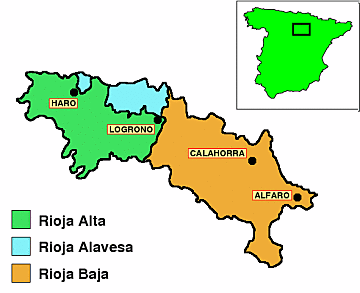
The region of Rioja, which is located about 100 kilometers south from the Atlantic ocean coast (about 62 miles), is divided into three areas: Rioja Alta, Rioja Alavesa and Rioja Baja. The best wines are from Rioja Alta and Rioja Alavesa thanks to a higher altitude and to more cool climate conditions because of the vicinity of the Atlantic ocean. Rioja Baja is located in an inner area, at a lower altitude and with a warmer and drier climate. Wines from Rioja Baja usually are more alcoholic, have a lower acidity and a more “ordinary” character as opposed to the ones produced in Rioja Alta and Rioja Alavesa. Even the composition of soil plays an important role. The best vineyards are planted in clay, calcareous and sandy soils typical in Rioja Alta and Rioja Alavesa. The climate of the area is also regulated by the natural shield offered by the Cantabrian Mountains, not far to the north of the region, which provides an efficient protection against the cold northern winds. Rioja is mainly identified with the production of red wine, however in this region is also produced white wine with Garnacha Blanca and Viura grapes, the latter known in other areas of Spain as Macabeo. The main red berried grape of Rioja is Tempranillo, which together with Garnacha, Graciano and Mazuelo make the blend for red wines of the region. Despite this is the classic composition of Rioja reds, today an increasing number of wineries choose to make wines with Tempranillo only. Moreover, even though this represents a pretty rare phenomenon, some wineries make wines produced with Tempranillo and Cabernet Sauvignon. This blend, which produces pretty different wines than typical Rioja, however offer an interesting result. Red wines produced in Rioja Alta usually are full bodied, concentrated and with pronounced aromas of fruit and can also have an appreciable roundness. Wines of Rioja Alavesa probably are the most full bodied of the region, with robust structures and a higher acidity. Reds from Rioja Baja are characterized by high alcoholic percentages, intense colors and a lesser acidity, finesse and aromas: for this reason they are usually used for blends. A characteristic of the production for Rioja wines is represented by the long aging times in cask, probably like in no other country in the world. Although long aging times represent the enological tradition of the region, today many producers tend to diminish these times according to the average periods adopted in other countries. The goal is to favor the production of fresher wines with fruity aromas, in order to satisfy the taste of modern consumers, including the local ones, and which is opposed to the wines aged for long times with complex aromas. The kind of oak traditionally used in Rioja is American, however many producers are using French oak. Both aging time and the type of oak used, gave origin to two different classes of producers and consumers: modernists and traditionalists, something similar already happened in Piedmont for Barolo. The practice of long aging in cask is also typical for the modest quantity of white wines produced in the region and that, in some cases, can be as long as five years followed by many other years in bottle. Whereas for reds the tendency of the long aging in cask is still strong and well established, for white wines things are changing in a drastic way. Mainly because of the modern taste that everyone would expect to find in a white wine, many producers have lowered aging times in cask for whites and others even avoid the aging in wood. The result is a fresher and more immediate wine, similar to the majority of the worldwide production, however for many producers the traditional aspect is still very important and continue to make whites aged for long times in cask and in bottle.
|
||||
Sauvignon BlancAmong the most unmistakable grapes of the world, Sauvignon Blanc, with its charming aromas and its fresh taste, always adds a special touch to its wines |
|
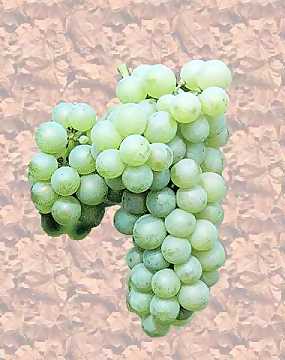
A grape from which are produced interesting wines and useful for the study of organoleptic evaluation for beginners certainly is Sauvignon Blanc, even though, of course, it is not the only one. Wines produced with this grape are frequently used to the introductory study of wine sensorial analysis just because of its particular organoleptic qualities. Sauvignon Blanc is a grape every good taster should be able to recognize, a skill which certainly is not hard to learn thanks to unmistakable aromatic characteristics of this grape. Sauvignon Blanc is considered as an aromatic grape, however it can be easily recognized for its rather “unusual” aromas and that often directly remind of smells of herbaceous and vegetal origin. Anyway Sauvignon Blanc is more than that. It seems Sauvignon Blanc originated in the Bordeaux area, where it is widely used for the production of dry white wines and to add a providential crispness to the renowned wines of Sauternes and Barsac. The French region which is usually related to this grape is the Loire Valley, to the north, and in particular, with a cool climate. The popularity of Sauvignon Blanc has gone beyond the borders of what was considered for many years its favorite land - France - and spread in almost every wine producing country of the world. In fact many producers, in particular the ones from the so called “New World”, enchanted by the magic of Sancerre and Pouilly-Fumé wines, produced in the Loire Valley, have tried to imitate that style and often adding new elements, such as the use of cask, while giving origin to new styles of wines. Today Sauvignon Blanc is considered as an international grape and everywhere it is very appreciated thanks to its organoleptic qualities. As always, and just like for any other grape, not all the Sauvignon Blanc out there is worth of attention and in some cases the results are widely different from what it is considered as a “reference model” and on which it can be recognized the typicality of this grape.
The characteristic which mainly distinguishes Sauvignon Blanc are its aromas that remind herbs and vegetables, they often resemble nettle and green bell pepper, as well as more “unusual” aromas that no one would expect to find in a wine, such as the one of cat urine. Indeed the aromas of Sauvignon Blanc are also completed by charming hints of fruits, frequently resembling tropical fruits, such as litchi, pineapple and passion fruit, as well as pretty rich flowery aromas. As always, the nature and the quality of any grape's aromas are affected by many factors, including the type of soil in which the vine is being cultivated, climate, ripeness at the time of harvesting and, last but not the least, the way it is being vinified and, of course, the specific aromatic qualities of the grape itself. The choice of the type of aromas in wines made with Sauvignon Blanc is also connected to productive reasons and whereas once was favored the exaltation of herbaceous and vegetal aromas - a typical characteristic in Sancerre and Pouilly-Fumé wines - today it is common to favor the development of fruity aromas. Sauvignon Blanc is also unmistakable for its taste and thanks to its typical crispness - almost a personal mark which is added to its aromas, therefore its taste - wines produced with this grapes are always pleasing and “intriguing”. Even Sauvignon Blanc's crispness is considered a typical characteristic, a quality which tends to lose within few years of aging as well as its crispness and freshness of aromas: for this reason it is preferred to drink its wines in their youth. Saved few and rare exceptions, including few Pouilly-Fumé produced in the small town of Pouilly-Sur-Loire, wines produced with Sauvignon Blanc, fermented and aged in steel tanks, do not stand to aging times longer than two or three years. After this period the wine loses most of its typical qualities while getting a “round” character and a lesser aromatic freshness. Sauvignon Blanc is mainly fermented and aged in steel tanks, in order to keep its organoleptic qualities, however some producers vinify this grape in casks. Despite the fermentation and aging of Sauvignon Blanc in cask, more frequently in barrique, contributes to the loss of the grape's typicality while adding the one of wood, the obtained wine has the capacity to stand to longer aging times. A Sauvignon Blanc vinified in cask usually has the capacity to live about two years longer and it usually gives and develops its best after about two years from production. The bunch of Sauvignon Blanc is pretty small and despite the fact it is common in the majority of the wine producing countries of the world, in order to give its best it needs pretty particular cultural conditions. Sauvignon Blanc ripens pretty late, however it can be harvested early according to the style of wine to be produced. The time of harvesting represents a critical factor: in case it is being harvested too early, the grape has little acidity and little aromas, whereas when it is being harvested too late, it loses part of its typical acidity. Moreover it is rather sensible to the development of molds - in particular Botrytis Cinerea - therefore it requires a higher attention and care during the cultivation practices. The formation of Botrytis Cinerea is generally wished for the production of botrytized wines, such as Sauternes and Barsac, where Sauvignon Blanc is frequently used to add crispness to Sémillon. Sauvignon Blanc prefers cool climates - such as the one of Loire Valley - a condition that allows the development of the best and most refined aromas, too precious in order to be covered by the aromas of wood. It is not by chance that in areas with warm climates, such as California, this grape is often fermented and aged in cask. Even the composition of the soil plays a fundamental role for the development of Sauvignon Blanc. The best results seem to be obtained in siliceous soils - which exalt its aromas - a condition that can be found, for example, in the Loire Valley. No matter it was the Loire to mainly influence the style of wines produced with Sauvignon Blanc, fermented and aged in steel tanks, the area itself has recently underwent the style of other countries, in particular the one of California. In this state, where they tried in the beginning to imitate the Loire method, they began to make use of the barrique for this grape therefore creating, as a matter of fact, a new style which was in turn used by some French producers as well. Without considering any personal preference about wines produced in casks or in steel tanks, the style which best suits and is expected from Sauvignon Blanc is the one obtained with the vinification in inert containers, such as stainless steel, and that fully keep and exalt the aromatic and gustatory qualities of the grape. In fact they are its aromatic qualities, often enriched by vegetal and herbaceous hints, to make Sauvignon Blanc interesting and unmistakable. The same is also true for its typical fresh taste which would be attenuated and “smoothened” by the effects of the fermentation and aging in cask.
|
||||||||
|
Sauvignon Blanc, like we said, is preferably cultivated in cool areas and vinified in steel tanks, therefore its most typical color is greenish yellow. It is not however rare to find wines produced with this grapes having more intense colors and tending to straw yellow, a sign, in case of young wines, of the cultivation of grapes in warm areas or fermented and aged in cask. Wines produced with Sauvignon Blanc are usually consumed during their youth, certainly the best period, however when it is allowed to age for some years in the bottle, the evolution of colors follows the typical course of white wines. The color of aged Sauvignon Blanc tends to change the hue from greenish yellow to straw yellow and then golden yellow, anyway, as opposed to other white wines, the intensity of colors usually is not accentuated and deep.
|
|
Sauvignon Blanc is considered as an aromatic grape and its presence in wines is easily recognizable thanks to the richness and variety of aromas. The aromatic characteristics of Sauvignon are strongly influenced by three main factors - certainly applicable to any other grape - and that greatly affect its personality. The two main factors are the climate of the area in which the grape was cultivated and the ripeness at the time of harvesting. The third factor, representing for this grape an uncommon condition, is determined by the fermentation and the aging in cask. It should be remembered the most frequent and typical way of vinification for Sauvignon Blanc is done in steel tanks or inert containers. Despite the way Sauvignon Blanc was vinified and the area in which it was cultivated, this grape always has an elegant aroma which distinguishes every aromatic grape and that directly resembles the aroma of grape. In case Sauvignon Blanc was cultivated in cool areas, or harvested when it reached an optimal ripeness, the aromas distinguishing the wine directly resemble vegetal and herbaceous smells, in particular green bell pepper, bruised black currant leaf, mown grass and nettle, as well as the aroma which distinguishes more than any other else Sauvignon Blanc, that is the smell of cat urine which also resembles the aroma of box flowers. Besides these aromas there also are the ones of elder and citrus fruits. In case Sauvignon Blanc was cultivated in warm areas or harvested when it reached full ripeness, its typical vegetal and herbaceous aromas are very low - however recognizable, according to area of origin - whereas are exalted aromas of fruits, in particular peach and tropical fruits, as well as flowery aromas - such as elder, broom, acacia and hawthorn - and the characteristic aroma of grape. Whereas once was preferred to distinguish Sauvignon Blanc with herbaceous and vegetal aromas, today it is preferred to make it in a way that exalts the fresh and inviting aromas of flowers and fruits. The fermentation and aging in cask give the grape complex, rich and spicy aromas, including the aroma of vanilla and toasted wood which sometimes excessively cover the aromatic character of this grape.
|
||||
|
The main gustatory characteristic of Sauvignon Blanc certainly is its zesty acidity. These wines are usually produced with a medium-high alcoholic percentage, a factor which is also justified by the high acidity of the grape and therefore requires proper “corrections” in order to be balanced. No matter the balance of the wine is more or less correct, the acidity is the characteristic which allows Sauvignon Blanc to be recognized and this quality certainly is very appreciated and appropriate for this kind of wine and for the aromatic nature of its aromas. Sauvignon Blanc makes wines with pretty vast structures and bodies which are influenced by the climate in which the grape was cultivated, the type of soil and ripeness. Wines produced with this grape can have from pretty delicate structures to a good body, a characteristic which is frequently determined by the method of vinification and in particular by the use of cask. The gustatory agreeability - and certainly aromatic as well - of Sauvignon Blanc is mainly appreciable during its youth, when the aromas, and therefore taste, keep the freshness of fruits and flowers with a pleasing and appreciable crispness. With aging - in general terms Sauvignon Blanc is not well suited for aging times longer than three years - the wine loses its typical freshness and the taste becomes more round and less acid, probably less pleasing and typical. Sauvignon Blancs vinified in inert containers, such as stainless steel, are usually dry and aromatic, whereas the ones fermented or aged in cask, have a more round and complex character where acidity certainly is less appreciable. Sauvignon Blanc is also used for the production of many sweet wines, in particular botrytized wines, such as Sauternes and Barsac, in which the acid contribution, as well as aromatic, allows these wines to have a good balance while avoiding them to be too sweet and sickly.
|
|
Sauvignon Blanc is a grape which is usually appreciated by consumers, generally enchanted by its aromatic and gustatory characteristics. Because of its spreading, today Sauvignon Blanc is considered among the so called “international” grapes and it is virtually present in every wine producing country of the world. There can be distinguished two production styles and that mainly distinguish the area of origin as well: Sauvignon Blanc vinified in steel tanks and the ones vinified in cask and other wood containers. The main area where Sauvignon Blanc is vinified without using any cask, as well as being considered as the reference land for this grape, certainly is Loire Valley in France. Here wines are characterized by herbaceous and vegetal aromas, as well as “smoky” such as the renowned Pouilly-Fumé. Among other examples of Loire should certainly be mentioned Sancerre, Touraine and Menetou-Salon. In Bordeaux this grape is present in the dry wines of Entre-Deux-Mers and Bergerac where the influence of a warmer climate is pretty evident. Also in Italy Sauvignon Blanc is mainly vinified in steel tanks, in particular in Alto Adige and in the Collio area in Friuli Venezia Giulia. The country which was capable to get distinguished with Sauvignon Blanc wines certainly is New Zealand, in particular the area of Marlborough where wines have a good acidity and a character resembling the ones of Loire. Sauvignon Blanc is also present in South Africa, in particular in the Stellenbosch area, Hungary, Australia, no matter here the climate is rather warm for this grape, and in Chile, where it is often confused with the less aromatic Sauvignon Vert. The practice of vinifying Sauvignon Blanc in casks is typical in the areas having a warmer climate, of which California certainly is the most representative one and where it was created a particular style of Sauvignon Blanc fermented and aged in cask called Fumé Blanc. The “fashion” of vinifying Sauvignon Blanc in casks has also reached Loire Valley, where some Pouilly-Fumé producers decided to make use of wood containers instead of the traditional steel tanks. Also in Pessac-Léognan, in the Bordeaux area, some producers make use of this vinification technique, and other examples of Sauvignon Blancs vinified in cask are offered by Italy, New Zealand, South Africa and Chile.
|
Wines of the Month |
|
|
Score legend Fair Pretty Good Good Very Good Excellent Fair Pretty Good Good Very Good Excellent Wine that excels in its category Wine that excels in its category Good value wine Good value winePrices are to be considered as indicative. Prices may vary according to the country or the shop where wines are bought |
|
|
Garda Classico Rosso Superiore 2000 |
|
| La Torre - Pasini (Italy) | |
| Grapes: Marzemino, Groppello, Barbera, Sangiovese | |
| Price: € 7,16 | Score: |
| This wine shows a deep ruby red color and nuances of ruby red, little transparency. The nose reveals intense, clean and pleasing aromas which start with hints of black cherry and blueberry followed by aromas of blackberry, plum, violet, vanilla and hints of licorice. In the mouth has good correspondence to the nose, a slightly tannic attack and however balanced by alcohol, good body, intense flavors, good tannins. The finish is persistent with flavors of black cherry and plum. This wine ages for 7-8 months in barrique and for 6 months in bottle. | |
| Food Match: Roasted meat, Broiled meat and barbecue, Stewed meat, Hard cheese | |
|
|
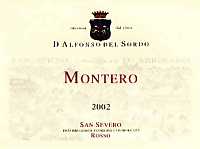
San Severo Rosso Montero 2002 |
|
| D'Alfonso del Sordo (Italy) | |
| Grapes: Montepulciano, Sangiovese | |
| Price: € 5,40 | Score: |
| The wine shows an intense ruby red color and nuances of ruby red, little transparency. The nose reveals intense, clean and pleasing aromas which start with hints of plum and black cherry followed by aromas of raspberry, cyclamen, blueberry, violet and pleasing hints of licorice. In the mouth has good correspondence to the nose, a slightly tannic attack and however balanced by alcohol, intense flavors, good body, good tannins. The finish is persistent with flavors of plum and black cherry. This wine ages for 4 months in barrique. | |
| Food Match: Sauteed meat with mushrooms, Broiled meat and barbecue, Roasted meat | |
|
|
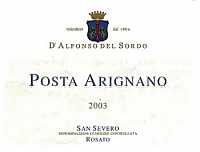
San Severo Rosato Posta Arignano 2003 |
|
| D'Alfonso del Sordo (Italy) | |
| Grapes: Montepulciano, Sangiovese | |
| Price: € 3,30 | Score: |
| The wine shows an intense cherry pink color and nuances of cherry pink, very transparent. The nose reveals clean and pleasing aromas which start with hints of cherry and raspberry followed by aromas of strawberry, cyclamen, pomegranate and peach. In the mouth has good correspondence to the nose, a slightly crisp attack and however balanced, good body, intense flavors, pleasing. The finish is persistent with flavors of cherry and peach. | |
| Food Match: Fish soups, Mushrooms soups, Pasta with mushrooms, Roasted fish | |
|
|
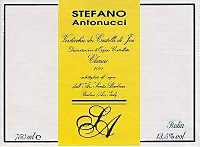
Verdicchio dei Castelli di Jesi Classico Stefano Antonucci 2001 |
|
| Santa Barbara (Italy) | |
| Grapes: Verdicchio | |
| Price: € 8,00 | Score: |
| This Verdicchio shows a pale golden yellow color and nuances of straw yellow, very transparent. The nose reveals good personality with intense, clean, pleasing and refined aromas which start with hints of peach and pear followed by good aromas of hawthorn, chamomile, broom, toasted wood, banana, apple and a pleasing hints of lavender. In the mouth has good correspondence to the nose, a crisp attack and however balanced by alcohol, good body, intense flavors, agreeable. The finish is persistent with flavors of apple and peach. A well made wine. This Verdicchio ages for 18 months in barrique. | |
| Food Match: Stuffed pasta with mushrooms, Roasted white meat, Roasted fish, Sauteed meat | |
|
|
Pathos 2001 |
|
| Santa Barbara (Italy) | |
| Grapes: Merlot (33%), Cabernet Sauvignon (33%), Syrah (33%) | |
| Price: € 24,00 | Score: |
| This wine shows a deep ruby red color and nuances of ruby red, impenetrable to light. The nose reveals great personality with intense, clean, pleasing, refined and elegant aromas which start with intense hints of plum, black currant, black cherry and violet followed by good and intense aromas of blackberry, licorice, tobacco, cocoa, vanilla, toasted wood and good hints of black pepper and eucalyptus. In the mouth has very good correspondence to the nose, a tannic attack and however well balanced by alcohol, full body, intense flavors, agreeable. The finish is very persistent with long and good flavors of black cherry, plum and blackberry. A great wine, very elegant. | |
| Food Match: Game, Braised and stewed meat, Hard cheese | |
|
|
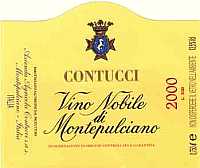
Vino Nobile di Montepulciano 2000 |
|
| Contucci (Italy) | |
| Grapes: Prugnolo Gentile (80%), Canaiolo Nero (15%), Mammolo (5%) | |
| Price: € 10,00 | Score: |
| The wine shows a brilliant ruby red color and nuances of ruby red, moderate transparency. The nose denotes intense, clean, pleasing and elegant aromas which start with hints of black cherry, plum and raspberry followed by aromas of blackberry, blueberry, licorice, carob, violet and vanilla. In the mouth has good correspondence to the nose, a slightly tannic attack and however balanced, good body, intense flavors, good tannins, agreeable. The finish is persistent with flavors of black cherry, blueberry and plum. A well made wine that ages for 18 months in cask and for 6-8 months in bottle. | |
| Food Match: Stewed meat with mushrooms, Roasted meat, Broiled meat and barbecue, Hard cheese | |
|
|
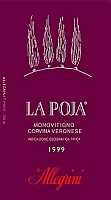
La Poja 1999 |
|
| Allegrini (Italy) | |
| Grapes: Corvina | |
| Price: € 49,00 | Score: |
| A great wine. It shows a deep ruby red color and nuances of garnet red, impenetrable to light. The nose reveals great personality with intense, clean, pleasing, refined and very elegant aromas that start with hints of plum, blackberry and black cherry followed by good and intense aromas of blueberry, violet, licorice, vanilla, cocoa, cinnamon and hints of menthol and thyme. In the mouth has very good to the nose, a slightly tannic attack and however well balanced by alcohol, full body, intense flavors, good tannins, very agreeable. The finish is very persistent with long flavors of plum, black cherry, blueberry and blackberry. A magnificent wine. La Poja is produced with overripe grapes and ages in cask for 20 months followed by 16 months in bottle. | |
| Food Match: Braised and stewed meat with mushrooms, Roasted meat, Game, Hard cheese | |
|
|
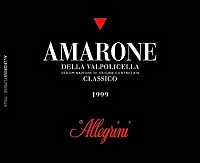
Amarone della Valpolicella Classico 1999 |
|
| Allegrini (Italy) | |
| Grapes: Corvina (75%), Rondinella (20%), Molinara (5%) | |
| Price: € 44,00 | Score: |
| This Amarone shows a deep ruby red color and nuances of garnet red, impenetrable to light. The nose reveals personality with intense, clean, pleasing, refined and elegant aromas which start with good hints of blackberry jam and black cherry jam followed by good and intense aromas of blueberry, plum, dried violet, tobacco, licorice, cinnamon, cocoa, vanilla and hints of cinchona and enamel. In the mouth has very good correspondence to the nose, a slightly tannic attack and however well balanced by alcohol, full body, intense flavors, good tannins, pleasing. The finish is very persistent with good and long flavors of blackberry, black cherry and plum. A very well made wine. This Amarone ages for 19 months in cask followed by 14 months of aging in bottle. | |
| Food Match: Roasted meat, Braised and stewed meat, Game, Hard cheese | |
|
|
Collio Pinot Grigio 2002 |
|
| Villa Russiz (Italy) | |
| Grapes: Pinot Gris | |
| Price: € 13,00 | Score: |
| This Pinot Gris shows a brilliant greenish yellow color and nuances of greenish yellow, very transparent. The nose reveals intense, clean, pleasing, refined and elegant aromas that start with hints of pear, apple and pineapple followed by aromas of hawthorn, banana, broom, litchi, hazelnut and grapefruit. In the mouth has good correspondence to the nose, a crisp attack and however balanced by alcohol, good body, intense flavors, agreeable. The finish is persistent with flavors of pineapple, pear and litchi. A well made wine. This Pinot Gris ages in steel tanks for at least 8 months. | |
| Food Match: Eggs, Fried fish, Fish Appetizers, Pasta and risotto with crustaceans | |
|
|
Collio Sauvignon De La Tour 2002 |
|
| Villa Russiz (Italy) | |
| Grapes: Sauvignon Blanc | |
| Price: € 25,00 | Score: |
| This wine shows an intense greenish yellow color and nuances of greenish yellow, very transparent. The nose reveals good personality with intense, clean, pleasing, refined and elegant aromas that start with good hints of peach, elder and pineapple followed by good aromas of acacia, litchi, apple, broom, grapefruit and hints of sage. In the mouth has very good correspondence to the nose, a crisp attack and however well balanced by alcohol, good body, intense flavors, very agreeable. The finish is very persistent with long flavors of peach, pineapple and pear. A well made wine. This Sauvignon Blanc ages for 10 months in steel tanks. | |
| Food Match: Crustaceans, Pasta with fish and crustaceans, Stewed fish, Broiled fish | |
|
|
Montepulciano d'Abruzzo Colline Teramane Opis Riserva 1998 |
|
| Farnese (Italy) | |
| Grapes: Montepulciano | |
| Price: € 22,00 | Score: |
| The wine shows an intense ruby red color and nuances of garnet red, little transparency. The nose reveals intense, clean, pleasing, elegant and refined aromas which start with hints of black cherry and plum followed by good aromas of blueberry, tobacco, dried violet, licorice, carob, vanilla and hints of toasted wood, menthol and cinchona. In the mouth has good correspondence to the nose, a slightly tannic attack and however balanced by alcohol, full body, intense flavors, good tannins, agreeable. The finish is persistent with flavors of plum, black cherry and blueberry. A well made wine. This Montepulciano d'Abruzzo ages in barrique for 18 months and for 6 months in bottle. | |
| Food Match: Braised and stewed meat, Roasted meat, Hard cheese | |
|
|
Edizione Cinque Autoctoni 2001 |
|
| Farnese (Italy) | |
| Grapes: Montepulciano (40%), Sangiovese (20%), Primitivo (25%), Negroamaro (10%), Malvasia Rossa (5%) | |
| Price: € 25,00 | Score: |
| This wine shows an intense ruby red color and nuances of ruby red, little transparency. The nose reveals good personality with intense, clean, pleasing, refined and elegant aromas which start with hints of black cherry jam and plum jam followed by aromas of blackberry, cinchona, blueberry, toasted wood, tobacco, licorice, violet, vanilla and hints of nutmeg and menthol. In the mouth has very good correspondence to the nose, a slightly tannic attack and however well balanced by alcohol, full body, intense flavors, good tannins, agreeable. The finish is persistent with good flavors of plum, black cherry and blackberry. A well made wine. Edizione Cinque Autoctoni ages in barrique for 12 months and for 6 months in bottle. | |
| Food Match: Game, Braised and stewed meat, Roasted meat, Hard cheese | |
|
|
Vernaccia di Oristano Riserva 1992 |
|
| Fratelli Serra (Italy) | |
| Grapes: Vernaccia di Oristano | |
| Price: € 9,00 | Score: |
| The wine shows an intense amber yellow color and nuances of amber yellow, very transparent. The nose reveals intense, clean, pleasing and refined aromas which start with good hints of almond and fig jam followed by good aromas of caramel, leather, date, honey, orange marmalade and walnut. In the mouth has good correspondence to the nose, a slightly crisp and pleasing round attack, however balanced, full body, intense flavors, agreeable. The finish is persistent with flavors of caramel, fig jam, date and almond. This Vernaccia di Oristano ages in chestnut casks. | |
| Food Match: Almond desserts, Roasted meat, Braised meat | |
|
|
Bucciato 2002 |
|
| Ca' Rugate (Italy) | |
| Grapes: Garganega | |
| Price: € 13,50 | Score: |
| The wine shows a brilliant golden yellow color and nuances of golden yellow, very transparent. The nose reveals good personality with intense, clean, pleasing, refined and elegant aromas that start with hints of medlar, honey and hawthorn followed by good aromas of quince, pear, ripe peach, almond and a hint of vanilla. In the mouth has good correspondence to the nose, a crisp and pleasing round attack however well balanced by alcohol, good body, intense flavors, agreeable. The finish is persistent with flavors of ripe peach and quince. A well made wine. Bucciato is made from late harvest grapes and part of this wine ferments in cask. | |
| Food Match: Pasta with mushrooms, Mushrooms soups, Stewed fish, Roasted fish | |
|
|
Soave Classico Monte Alto 2002 |
|
| Ca' Rugate (Italy) | |
| Grapes: Garganega | |
| Price: € 12,50 | Score: |
| This wine shows an intense straw yellow color and nuances of straw yellow, very transparent. The nose reveals good personality with intense, clean, pleasing, refined and elegant aromas which start with good hints of apple, pear and broom followed by good aromas of almond flowers, hawthorn, litchi, honey, ripe peach, plum and hints of vanilla. In the mouth has good correspondence to the nose, a crisp attack and however well balanced by alcohol, good body, intense flavors, pleasing roundness. The finish is persistent with good flavors of peach and pear. A well made wine. Monte Alto is produced with overripe grapes and ages in barrique for 6-8 months. | |
| Food Match: Pasta with mushrooms, Mushrooms soups, Sauteed white meat, Roasted and stewed fish | |
|
|
Antinoo 2001 |
|
| Casale del Giglio (Italy) | |
| Grapes: Chardonnay (66%), Viognier (34%) | |
| Price: € 10,00 | Score: |
| This wine shows a pale straw yellow color and nuances of straw yellow, very transparent. The nose reveals intense, clean, pleasing and elegant aromas which start with hints of peach, pear and toasted wood followed by good aromas of apple, pineapple, hawthorn, litchi, grapefruit and vanilla. In the mouth has good correspondence to the nose, a crisp attack and however balanced by alcohol, good body, intense flavors, pleasing. The finish is persistent with flavors of peach, pear and apple. Antinoo ages in barrique for 6-8 months. | |
| Food Match: Pasta with mushrooms, Sauteed meat with mushrooms, Fried and broiled fish | |
|
|
Satrico 2003 |
|
| Casale del Giglio (Italy) | |
| Grapes: Chardonnay, Sauvignon Blanc, Trebbiano Giallo | |
| Price: € 5,00 | Score: |
| This wine shows a brilliant greenish yellow color and nuances of greenish yellow, very transparent. The nose reveals intense, clean, pleasing, refined and elegant aromas that start with hints of peach, litchi and pineapple followed by good aromas of acacia, broom, pear, apple and hints of elder. In the mouth has good correspondence to the nose, a crisp attack and however well balanced by alcohol, good body, intense flavors, agreeable. The finish is persistent with flavors of peach, pear and pineapple. A well made wine. | |
| Food Match: Fish appetizers, Fried fish, Pasta and risotto with fish and crustaceans, Sauteed fish | |
|
|
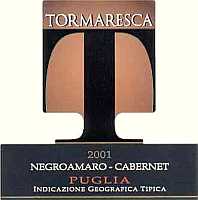
Tormaresca Rosso 2001 |
|
| Tormaresca (Italy) | |
| Grapes: Negroamaro (70%), Cabernet Sauvignon (30%) | |
| Price: € 7,00 | Score: |
| The wine shows a brilliant ruby red color and nuances of garnet red, little transparency. The nose reveals intense, clean, pleasing and elegant aromas which start with hints of raspberry and blueberry followed by aromas of strawberry, black cherry, cyclamen, plum and violet. In the mouth has good correspondence to the nose, a slightly tannic attack and however balanced, good body, intense flavors, good tannins. The finish is persistent with flavors of plum, black cherry and blueberry. This wine ages in steel tanks. | |
| Food Match: Roasted meat, Broiled meat and barbecue, Hard cheese | |
|
|
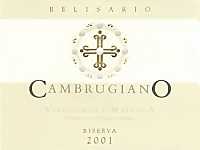
Verdicchio di Matelica Riserva Cambrugiano 2001 |
|
| Belisario (Italy) | |
| Grapes: Verdicchio di Matelica | |
| Price: € 8,80 | Score: |
| This wine shows a brilliant golden yellow color and nuances of golden yellow, very transparent. The nose reveals good personality with intense, clean, pleasing and elegant aromas that start with hints of pear, apple and toasted wood followed by good aromas of hawthorn, broom, pineapple, lemon, grapefruit, plum and vanilla. In the mouth has good correspondence to the nose, a crisp attack and however well balanced by alcohol, good body, intense flavors, agreeable. The finish is persistent with good flavors of plum, pear and pineapple. A well made wine. A small part of Cambrugiano ages in barrique for 12 months. | |
| Food Match: Roasted fish, Mushrooms soups, Roasted white meat, Stuffed pasta | |

|
|
Verdicchio di Matelica Passito Carpe Diem 2001 |
|
| Belisario (Italy) | |
| Grapes: Verdicchio di Matelica | |
| Price: € 8,50 - 500ml | Score: |
| This wine shows a brilliant amber yellow color and nuances of golden yellow, very transparent. The nose reveals good personality with intense, clean, pleasing, refined and elegant aromas which start with hints of dried apricot and peach jam followed by good aromas of candied fruit, caramel, ripe banana, dried fig, almond, honey, citrus fruit peel, vanilla and hints of enamel. In the mouth has very good correspondence to the nose, a sweet and slightly crisp attack however well balanced by alcohol, good body, intense flavors, pleasing sweetness. The finish is persistent with good flavors of apricot, peach and honey. A well made wine. Carpe Diem is produced is dried grapes and ages for 10 months in steel tanks and for 2 months in barrique. | |
| Food Match: Confectionery, Almond cakes, Hard and piquant cheese | |
Ferrari - Fratelli LunelliA historical name connected to the production of the Italian classic method sparkling wine, a prestigious winery from Trentino which also produces great wines and refined grappas |
|
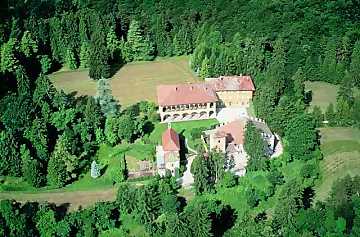
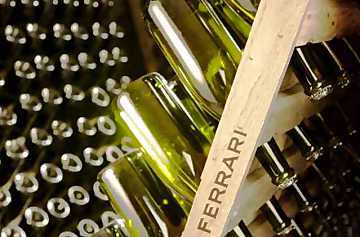
The history of the Italian classic method sparkling wine is indissolubly related to the precious work of Giulio Ferrari who in the beginning of the last century decided to turn his passion into reality, the one of producing classic method sparkling wines in his homeland: Trentino. In 1902 and at 23 years old only, Giulio Ferrari, expert viticulturist and enologist, establishes in Trento his winery that will deeply mark the development of Italian enology and bubbles. The young Giulio Ferrari studies at the Imperial Regia Scuola Agraria di San Michele (Imperial and Royal School of Agriculture of San Michele) and later at the renowned School of Agriculture of Montpellier in France. After having worked for some time in Epernay, in the heart of Champagne, he learns the secrets of the production of classic method sparkling wine that he will then adopt in his Trentino. Exacting, strict and determined, Giulio Ferrari in few years is successful in producing his renowned sparkling wine and that will just be the beginning of a repeated success in Italy and in the world.
In 1952 Bruno Lunelli, father of the current owners, bought from Giulio Ferrari both the trademark and the winery of his prestigious sparkling wines. At those times were produced about 9000 bottles and every one of them was reserved with many years in advance. In 1969 Bruno Lunelli passes the management of the winery to his sons: Gino and Franco, responsible for the administration and the chairmanship, and Mauro, together with the father Bruno, in the cellar and responsible for the production of the noble bubbles, renowned in the world as Spumante Classico Ferrari. Thanks to the experience acquired from the historical sparkling wines Ferrari Demi-Sec and Ferrari Maximum Brut, Mauro Lunelli develops a scrupulous experimentation and research based on taste and style that were getting more and more international and common. In the course of the years, also thanks to the repeated worldwide success, today Ferrari continues to be among the most appreciated and famous Italian sparkling wines in the world. The variety of production has grown up and today, besides Ferrari Brut, Ferrari Rosé, Demi-Sec and Maximum Brut, are also produced the millesimée Ferrari Perlé, Ferrari Perlé Rosé and the renowned and extraordinary Riserva del Fondatore Giulio Ferrari. Ferrari's classic method sparkling wines born and ages now in a new cellar: an area of thirty thousands square meters (about 35,880 square yards) where more than fifteen millions of bottles of different vintages are left to age. Every year are released on the market and consumed about four millions and five hundreds thousand bottles, however the spirit and the soul of spumante Ferrari, its conscience and its emotion, are the ones which respected from the very beginning the principle of “from vineyards to the table”. All Ferrari's classic method sparkling wines are exclusively produced with grapes cultivated in Trentino and coming from family vineyards as well as from historical vintner friends. The production of the cellar is made by 8 enologists led by Mauro Lunelli to whom he passes every year the fundaments and the principles of that art and of that passion which made Spumante Ferrari renowned and important.
The Lunelli family, rich in secular experience acquired in the production of classic method sparkling wine, in the 1980's decides to expand its production with dry still wines, obtained with grapes coming from family owned vineyards and cultivated in the hills of Trento. Today the Lunelli Winery produces both white wines and red wines, bodied and structured, that well express the typicality and the enological vocation of Trentino. The consciousness of the certainty that a great wine is obtained from quality grapes, led Lunelli winery to look for Masi and Ville that could worthily represent the enological soul of the territory. Based on this concept were born the whites Villa Margon and Villa Gentilotti, in both present Chardonnay, and Villa San Nicolò produced with Sauvignon Blanc grape. In the 1990's, after some years of experimentation, are produced two red wines, both belonging to Trentino DOC: Maso Le Viane, made with Cabernet Franc, Cabernet Sauvignon and Merlot grapes, and Maso Montalto, produced with Pinot Noir. These wines, with remarkable possibilities of aging in bottle, are being aged in wood containers, with care and mastery, in order to keep the personality of the grapes used for the production. Classic method sparkling wines and still wines would be considered enough to well represent a remarkable production of every winery, however the Lunelli family is also involved in the production of refined grappas - the historical trademark Segnana - after all in a region like Trentino having strong and important connections with this distillate, it could also be seen as normal. Segnana makes grappa since 1860 and in the beginning was just a mobile distillery, with the equipment installed on a cart hauled by horses with which Paolo Segnana used to go directly to wineries and there he distilled, in front of everyone, the pomace in order to make grappa. At the end of the 1880's the distillery was established at Borgo Valsugana and in a short time became an important reference model for Trentino's grappa. In 1982 Segnana was acquired by Lunelli family and the grappa they produce is considered as a son of the “wine family” because it is produced with the pomace used for the production of Ferrari spumante, softly pressed and rich in must. Today the distillery was moved in Trento, near the Ferrari winery, in order to mark the bond between grappa Segnana and Ferrari Spumante. The grappas are exclusively produced with a steam operated batch distillation, moreover Segnana is a member of the Istituto Tutela Grappa del Trentino (Institute for the Safeguarding of Trentino Grappa). A particular mention goes to grappa Solera, exclusively produced with selected pomace from Trentino and aged in cask with the Solera method, the same used for the production of the renowned Jerez (Sherry) and Marsala. The obtained grappa is of absolute elegance and benefits from the particular and prolonged aging in wood. Because of its peculiar qualities and in order to better appreciate this special grappa, it is best to serve it at room temperature and in balloon glasses. Interesting are also the possible matchings that can be created with this particular grappa, such as with cigars or chocolate, in which the alcohol and roundness of the distillate contribute to the harmony of the matching.
|
||||||||||||||||||||
|
Score legend Fair Pretty Good Good Very Good Excellent Wine that excels in its category Good value wine Prices are to be considered as indicative. Prices may vary according to the country or the shop where wines are bought |
|
|
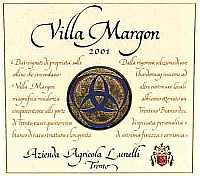
Trentino Bianco Villa Margon 2001 |
|
| Fratelli Lunelli (Italy) | |
| Grapes: Chardonnay (80%), Pinot Blanc (10%), Sauvignon Blanc, Incrocio Manzoni (10%) | |
| Price: € 10,00 | Score: |
| The wine shows a pale straw yellow color and nuances of greenish yellow, very transparent. The nose reveals intense, clean, pleasing and elegant aromas which start with hints of apple and pineapple followed by aromas of hawthorn, hazelnut, pear, grapefruit, plum, yeast and hints of vanilla and toasted wood. In the mouth has good correspondence to the nose, a crisp attack and however balanced by alcohol, good body, intense flavors, pleasing. The finish is persistent with flavors of pineapple, pear and plum. A well made wine. Part of this wine ferments in cask. Villa Margon is aged for 8 months in bottle. | |
| Food Match: Mushrooms soups, Stuffed pasta, Roasted fish, Roasted white meat | |
|
|
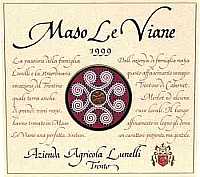
Trentino Rosso Maso Le Viane 1999 |
|
| Fratelli Lunelli (Italy) | |
| Grapes: Cabernet Franc, Cabernet Sauvignon, Merlot | |
| Price: € 23,90 | Score: |
| The wine shows an intense ruby red color and nuances of garnet red, little transparency. The nose reveals intense, clean, pleasing and refined aromas which start with hints of black cherry jam and blueberry jam followed by good aromas of blackberry jam, dried plum, dried violet, vanilla, licorice, tobacco and hints of cocoa and cinnamon. In the mouth has good correspondence to the nose, a slightly tannic attack and however well balanced by alcohol, full body, intense flavors, good tannins. The finish is persistent with flavors of plum and blueberry jam. A well made wine. Maso Le Viane is aged for at least 18 months in cask followed by at least 18 months of aging in bottle. | |
| Food Match: Roasted meat, Braised and stewed meat, Game, Hard cheese | |
|
|
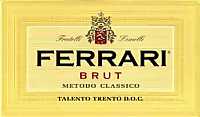
Trento Ferrari Brut |
|
| Ferrari (Italy) | |
| Grapes: Chardonnay (95%), Pinot Noir (5%) | |
| Price: € 16,80 | Score: |
| The wine shows a pale straw yellow color and nuances of greenish yellow, fine and persistent perlage, good effervescence. The nose reveals intense, clean and pleasing aromas that start with hints of apple and acacia followed by aromas of banana, yeast, brioche, lemon, litchi, pear and grapefruit. In the mouth has good correspondence to the nose, an effervescent and crisp attack however balanced, good body, intense flavors, agreeable. The finish is persistent with flavors of pear and lemon. This sparkling wine is produced with the classic method and ages on yeasts for 24 months. | |
| Food Match: Aperitifs, Crustaceans, Fried fish, Pasta and risotto with fish and vegetables | |
|
|
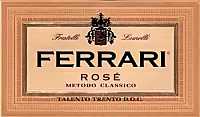
Trento Ferrari Rosé |
|
| Ferrari (Italy) | |
| Grapes: Pinot Noir, Chardonnay | |
| Price: € 19,30 | Score: |
| The wine shows a brilliant onion pink and nuances of onion pink, fine and persistent perlage, good effervescence. The nose denotes intense, clean and pleasing aromas which start with hints of tangerine, raspberry and cherry followed by aromas of strawberry, yeasts, bread crust and peach. In the mouth has good correspondence to the nose, an effervescent and crisp attack however balanced, good body, intense flavors, agreeable. The finish is persistent with flavors of tangerine and cherry. This sparkling wine is produced with the classic method and ages on yeasts for at least 24 months. | |
| Food Match: Mushrooms and vegetables soups, Crustaceans, Pasta and risotto with fish and vegetables | |
|
|
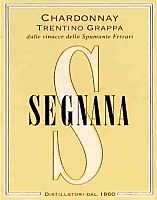
Grappa Chardonnay |
|
| Segnana (Italy) | |
| Grapes: Chardonnay | |
| Price: € 16,12 - 500ml (17 fl.oz.) | Score: |
| This grappa shows with no color and crystalline. The nose reveals intense, persistent and elegant aromas of pear, hazelnut, apple, banana, walnut, hay with imperceptible alcohol pungency. The taste is intense, persistent, well balanced and non aggressive alcohol with good correspondence to the nose, round and agreeable. The finish is intense and persistent with hints of sweetness, clean and agreeable, with flavors of pear and banana. This grappa is produced with the pomace used for the production of spumante Ferrari. | |
|
|
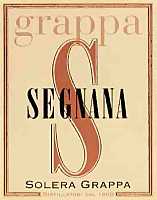
Grappa Solera |
|
| Segnana (Italy) | |
| Price: € 18,43 - 500ml (17 fl.oz.) | Score: |
| The grappa shows a deep and brilliant amber yellow color, crystalline. The nose reveals good personality with intense, persistent, refined and elegant aromas of dried fig, vanilla, dried plum, apple, pear, hazelnut, tobacco, caramel, honey and licorice. In the mouth has good correspondence to the nose, intense, persistent, balanced, round, non aggressive alcohol. The finish is intense and persistent with hints of sweetness and flavors of licorice, vanilla, dried plum, caramel, honey and hints of toasted wood. A very well made grappa. This grappa ages in cask by using the Solera method. | |
| Ferrari - Fratelli Lunelli - Via del Ponte di Ravina, 15 - 38040 Trento (Italy) - Tel. (+39) 0461 972311 Fax (+39) 0461 913008 - Winemaker: Mauro e Marcello Lunelli, Ruben Larentis - Established: 1902 - Production: 4.500.000 bottles - E-Mail: info@ferrarispumante.it - WEB: www.ferrarispumante.it |
Cellar Journal |
|
This section is reserved to wine producers who want to publish news and information about their business, to announce new products or just for communicating to its customers information and promotions about their products and activity. Send news to be published at our e-mail address.
|
EnoTemp: Let's Play with TemperatureWith springtime arrives a new EnoGame to test your knowledge about wine and the correct serving temperature |
After EnoQuiz and EnoGlass, the EnoGames currently available in our site, this month is being introduced EnoTemp, a game about serving temperature available in two difficulty levels. The temperature at which a wine is served certainly is important and with EnoTemp you can test your knowledge and competence of talented sommelier. In the first level, the easier of the two, are being proposed ten wines, selected among the ones available in the Wines Guide, and for them is to be chosen the proper serving temperature from the three suggested. In the second level, destined to the ones having a more deep knowledge about wines and serving temperatures, the player must enter the temperature himself or herself. In this level can also be chosen the measuring system with which are entered temperatures - Celsius or Fahrenheit - an useful option that will make things easier to our readers from the United States of America. No matter the difficulty level, every question answered right will score one point. EnoTemp is available at the page EnoGames.
|
||||||||
News |
|
In this section will be published news and information about events concerning the world of wine and food. Whoever is interested in publishing this kind of information can send us a mail at our address.
|
The CaskThere are some who dislike it and others who love it: the cask is recently a subject of debates, nevertheless its history is related to the one of wine since many centuries and its positive contribution to enology is undeniable |
|
The cask, or barrel, the famous wood container used in enology for the aging of wine and frequently for the fermentation of must as well, has tied, in the course of centuries, a solid connection to the beverage of Bacchus and its contribution certainly is useful, sometimes essential. Once casks were used for storing, keeping and transporting many goods, both solid and liquid, whereas now their main use is almost and exclusively related to wines and some distillates. Wine and wood have lived together for many centuries and today, more than ever, or better to say, since some years, the subject have become current, maybe because of the excessive use done with this useful cellaring tool. Among wine lovers there are three “schools of thought”: the ones who dislike even the faintest hints of wood in wine, the ones who are delighted when lots of wood is found in wine and, finally, the ones who prefer to stay in the middle, supporters of the famous Latin saying In Medio Stat Virtus (virtue is in the middle). An aspect connected to the cask is however undeniable and it should be made clear from the beginning: in general terms, the contribution of the cask in wine making is certainly useful, in many cases it is fundamental and not only for the aromas and flavors that can be passed to wine: many wines would not be considered as sumptuous and magnificent in case the wine maker would have not used the cask. What it is arguable is the use of the cask in relation to its characteristics and the style of wine. This consideration certainly is relative to the taste and the preferences of everyone, however - it is good to remember - among the fundamental factors determining the class and the quality of a wine there are its balance and the harmony with which the many elements are expressed; therefore the contribution of wood must be balanced according to the other characteristics.
|
|
The most evident effects of the cask on wine for the consumers of this beverage are perceivable in the aromas and in the taste. Indeed this is only one of the effects derived from the use of cask in the fermentation and in the aging of wine. However it is the influence on the aromatic qualities in a wine which usually is argued by wine lovers. For many the excessive quantity of aromatic elements passed from wood to wine “perverts” its personality, for others this completes the wine or can even exalt it. However this is not the essential point: every one has his or her personal preferences and tastes and on these we are not going to argue, the main aspect which interests us is about the general effects of the cask on the production of wine. Before talking about the effects of the cask on wine it is necessary to understand the general characteristics of this container. The type of wood used for the construction of the cask, as well as its origin, the volume, the way the wood was processed and the time of aging, are all essential factors which directly influence the quality of the wine that it will be later contain. To those factors is also included the age of the cask, that is the number of times it was used for containing wine, technically called passages. A cask which never contained any wine after its construction is called new or of first passage, its second and subsequent usage will be defined as second passage, therefore third passage and so on. In the production of quality wines a cask is rarely used after its third passage because of many factors that influence both the quality of the cask itself and wine. The essential factor which allows the cask to be used profitably is represented by a strict hygienic condition: a dirty cask with unpleasing smells will pass these faults to the wine. Moreover it should be remembered the cask is made of an organic matter - wood - and that will contain an organic substance - wine - made for the most part of water. The wood is a porous substance and easily absorbs the liquids it gets in contact with, and in case of water - which in wine represents about the 87% - it could happen the development and formation of unpleasing molds. Moreover, after every passage wood passes its aromatic and chemical substances to the wine therefore diminishing its contribution in the next passages. By considering the costs for a strict cleaning of casks are not negligible and the diminishing of aromatic and chemical components would influence on the final characteristics of wine, producers usually buy new casks every two or three years. The influence of cask on wine also depends by productive and enological choices, including the style and “character” to be obtained. Two main elements - and however not to be considered as the only ones - which influence in a more evident way on the organoleptic qualities of a wine are the size of the cask and the level of toasting of the wood. During the construction of a cask, staves, that is the wood boards making the cask, are processed by the heat produced by a flame burning in the inside to soften the wood in order to bend them and to have it shaped in its typical form. The action of the heat also affects the structure of the wood by “burning” - or better to say, toasting, the side in contact with the flame. The higher the time the wood is processed this way, the higher the toasting will be. The toasted character of the wood will be then passed to the wine therefore giving it more or less accentuated aromas and flavors. The choice of the toasting of a cask is based on enological and productive decisions and according to the style of wine to be produced.
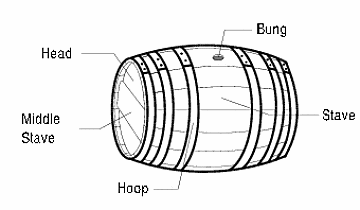
The characteristics of the wine contained in a cask are not only affected by toasting. During the aging in cask, wood passes to wine many aromatic substances that will then influence both its taste and aroma. Among them is to be mentioned vanilline, responsible for the most typical aroma found in wines aged in wood: vanilla. Moreover are also passed other aromatic substances, according to the type of wood and how the cask was made, which generally give wine spicy aromas. During this process the wood also passes phenols substances, usually defined as tannins, which will give wine a greater structure and, last but not the least, color. The effects of the cask on the color of wine are more clearly visible in white wines where the straw yellow and golden yellow hues get accentuated. It should be remembered the contribution and the influence of these factors is regulated by the size of the cask, by its toasting, the age of the cask and the time a wine will stay inside it. The greater the size of a cask, the lesser the contact surface to wine volume ratio will be, therefore the lesser the influence of substances passed to the wine will be. On the other hand, the lesser the size of cask, and therefore the lesser the volume of wine, the greater the effects on the organoleptic qualities - aromatic and gustatory - will be. These factors are strictly evaluated by enologists at the time of the making of a wine and represent fundamental choices in case they decide to make use of cask. During the stay of wine in cask also happen other important processes that will be both fundamental and essential to the quality. Wood is a porous matter and therefore it allows the passage of oxygen and liquids. Both water and ethyl alcohol pass through the staves of the cask and reach the outside therefore concentrating the wine. This factor is of extreme importance for the evolution and the aging of wine. Water, which has smaller molecules than ethyl alcohol, passes through the wood more easily and more rapidly and it is the first to reach the outside of the cask. In the outside of the cask water evaporates according to the humidity of the room where the casks are stored. In conditions of relatively low humidity, water evaporates more rapidly than alcohol and the result is a concentration of wine's components and the percentage of alcohol slightly increases, more or less of some tenths percent. Things changes in case the casks are stored in rooms having a relatively high humidity. In this case the evaporation of alcohol is according to the quantity of evaporated water, therefore the alcohol percentage could also decrease. The evaporation of water and alcohol are also affected by the thickness of staves, the variations of temperature and the air streams in the cellar. The evaporation of water and alcohol favors the concentration of wine, however it also lowers the level inside the cask while leaving a “dangerous” empty space that will be occupied by air, therefore oxygen. For this reason casks are frequently refilled with the same wine in order to have them always full and with no air inside that would be cause of an evident and detrimental oxidization on wine. No matter the casks are periodically refilled in order to eliminate air, oxygen gets however into the cask through the pores of wood. This small quantity of oxygen has very positive effects in the aging and the development of wine and represents one of the main factors responsible for the evolution of wine over the time. Oxygen favors the combination of the many elements constituting the wine while giving it a rounder and smoother character. Oxygen also plays a role every time the bung is removed from cask - that is the big plug placed on the top - during the operation of refilling and decanting.
|
||||||||||||
|
Casks were once made of many types of woods, including chestnut, cherry and acacia, as well as, of course, oak. Among these types of wood the most used one today is oak and, rarely, chestnut. Oak wood is preferred to the others because it is harder and has sweeter and more aromatic phenolic substances - tannins - which better relates to the structure and aromas of wine. Among the hundreds of varieties of oak existing in the world, only three of them are preferably used for the making of casks. The two main varieties are quercus sessilis (oak), quercus robur (oak) and quercus alba (American oak), as well as quercus peduncolata (oak). The main European areas where oak for the making of casks is from are the central part of France and the Balkans. French oak is generally considered the best of the world, however in some Italian wine areas it is preferred Slovenian oak. The best American oak (quercus alba) is mainly from Pennsylvania, Minnesota and Wisconsin, however it is also found in many other states of the eastern coast. Moreover it is also present in California and in Oregon where it is mainly found the quercus gariana variety. The wood which is mainly preferred for wine making is the one having a fine grain, a condition which is obtained only thanks to a slow growing rate of the tree and favored by the cool climate areas, such as the one of France. The most wanted oak variety in enology is quercus sessilis because it grows up in groups, has longer and straight trunks and grows up slowly. Quercus robur grows up in a solitary way and prefers places rich in water with the result of a more rapid growth and a coarser grain. Quercus sessilis is also looked for because it is richer in aromatic components than quercus robur of about four times. The oak used for the making of casks is usually called with the name of the forest or the area it comes from, therefore, famous names like Tronçais, Nevers, Allier and Limousin are all names of French forests from which oak is being produced. The many types of oak coming from the many areas of the world have proper characteristics that affect the quality of wine. American oak has a pretty fast growth and has a coarser grain than the European one, has a lower quantity of tannins and has sweet aromatic components which usually resemble coconut. This type of oak is usually used in Rioja, Australia and California. French oak belongs to the quercus sessilis species, with the exception of the one from Limousin that belongs to the quercus robur species. Allier oak is very looked for because it has a very fine grain and a good balance between tannins and aromatic components. Argonne oak, today rarely used and with limited quantities of tannins and aromatic components, was once appreciated in the Champagne area before the introduction of steel tanks. Bourgogne oak has a fine grain, a high quantity of tannins and little aromatic components and it is mainly used in the Bourgogne area. Limousin oak, the only French oak belonging to the quercus robur species, has a coarser grain, a low content in aromatic components and in the past was used for Chardonnay wines, today its most frequent use is for the aging of brandies, in particular Cognac. Nevers oak, very appreciated and looked for, has a fine grain with a moderate and well balanced content in tannins and aromatic components. Tronçais oak has a very fine grain, a high content in tannins and a moderate content of aromatic components, it is particularly suited for long aging and it is very appreciated and looked for. Vosges oak has a fine grain and a high content in tannins, a low content in aromatic components which resemble spices and it is rather wanted for the excellent balance between tannins and aromatic components. Slovenian oak, pretty common in Italy for the making of large casks, belongs to the quercus robur species, has a fine grain, a moderate content in tannins and a low quantity of aromatic components. Portuguese oak, belonging to the quercus gariana species, is not very common and it is mainly used in Portugal, has an average grain and a good content in aromatic components. Finally, Russian oak, belonging to the quercus sessilis species, has a fine grain and a low quantity of aromatic components and it was very used in the Bordeaux region during the nineteenth century up to the 1930's. No matter in France there are the most important oak forests, today some French producers are using the Russian oak again mainly because of its cheaper cost.
|
RiceRice is one of the most important cereals of our planet as its grains make the base and essential food for more than the half of the human population |
|
The plant of rice belongs to the genre of Gramineae, to the family of Monocotyledons, genre Oryza Sativa and it is divided in two varietal groups “Japonica”, with a round shaped grain, and “Indica”, with a stretched shaped grain. There is also another genre, “Oryza Glaberrima”, currently and exclusively cultivated in the western part of Africa. Slowly, but inexorably, the cultivations of Oryza Glaberrima are being replaced by the most common Oryza Sativa. The rice is a tropical plant, which loves water, and needs a warm-humid climate, in fact it cannot grow at a higher latitude of 53° north and 35° south and it cannot survive at temperatures lower than 13° C (55° F). The plants of rice are divided into two main groups: hygrophile and hydrophile. The hygrophiles are terrestrial plants which well vegetates in continuously humid environments whereas hydrophiles are plants which pollination occurs only by means of water.
The hygrophile plants, or “upland rice”, love the warmth and the humidity, they are not cultivated submerged in water and they need daily rains. Hygrophile plants are cultivated in some regions of Asia, Africa and South America. Hydrophile plants, or “paddy rice”, grow in rice fields flooded with water and this technique allows the cultivation of rice at latitudes where the cold could compromise the life of seeds and of the plants. The water absorbs the warmth of the day and gives it back during the night, therefore keeping a constant temperature in order to ensure a good condition both to the seeds and the young plants. Water in rice fields must not be stagnant and it is required a replacement of flowing water in order not to lose oxygen, an essential element for the life of plants. Inside the leaves and the trunk, as well as in roots, there are intracellular spaces which allow plants to absorb oxygen from the air. It seems that in order to obtain one kilogram (2.2 lbs) of rice are needed from 3,000 to 10,000 liters of water (792-2,640 gallons). Cultivating rice in water offers many advantages: water transports in the rice field many nutritional elements from the outside and thanks to that it can be obtained a harvest as high as 50% of a manured rice field. Contrary to rice, other plants does not like living in water and this greatly limits the proliferation of unwanted plants in rice fields. The cultivation without water needs a rest cycle or to change the type of culture in order not to impoverish the soil, on the other hand the ones submerged in water does not require this condition and the lands used as rice fields, thanks to water, can be reused.
|
||||||||
|
The plant of rice originated from the regions of South-East Asia and thanks to evidences dated back to 5,000 or 6,000 years ago in Eastern China and in a cave in north Thailand, it can be said that rice has been massively cultivated for more than seven thousands years. Very ancient and historical evidences, dated back to three thousands years ago were discovered in India in the region of Ganges. The most ancient cultivation techniques belong to the Chinese tradition. In 1952 a Japanese called Matsuo wanted to study the history of rice based on its genetic profile. According to his studies it seems Oryza Sativa was originated in Java island about eight thousands years ago, however other theories suggest it was originated in a Cambodian area. Besides these theories, archeology gives us some precise information: in China, about seven thousands years ago, rice was consumed and cultivated. According to some diggings and evidences found in India, exactly in the state of Uttar Pradesh, it was discovered that around 1000 BC the population of that land used to eat rice. These hypotheses are also confirmed by the millenary tradition of the eastern cooking which is strongly based on rice. There are many legends, stories and sayings of the people's traditions which strengthens the oriental origin of rice. A Chinese saying reads “Eat your rice, the rest will be provided by heaven”, or “one works and nine eat rice”. A Cambodian legend goes that during a period of drought a boy sowed some seeds in the water and in front of astonished people who were convinced that they would have never sprouted. After some months the plants grew up and bore abundant fruits and the whole population hunger could be appeased. For this reason the boy was permitted to marry the daughter of the chief of the village. The boy was asked about his origins and he said he was from the west, so everyone thought he was from India, therefore thinking the origin of rice was from India as well. For the people of South-East Asia, rice is so important for their surviving that with time it almost acquired the dignity of a person, in fact the tradition of those regions believes rice has its own soul. A Chinese emperor, who lived between 1662 and 1723 BC, called Kang Hi, had, among the many things, a passion for agriculture and he used to take walks among fields in order to observe cultivations, plants and nature while trying to understand their secrets. One day he was impressed by the fact some ears of rice matured more rapidly than others. He observed them carefully, and studied them together with his collaborators and he then discovered a new kind of rice: “Yu Mi” or “Imperial Rice”, an early variety which can ripen three months in advance, before the cold of the regions north to the great wall could compromise harvest. The same discovery was made in other parts of the world: in Italy, Hungary, Romania and in Russian regions was individuated a rice that could be cultivated in the areas where the climate did not allow the cultivation of the traditional varieties. Whoever traveled in the regions of the South East Asia, in China, in some African regions, such as Madagascar and Sierra Leone, knows how important and fundamental for those people is rice as a food: it is like reindeers for Laplanders and like seals for Inuit. Egyptians and Jews did not know rice and neither the Bible mentions it. Maybe Alexander the Great introduced it in Greece. In Italy was probably introduced by Arabs or by Venetians, nothing is certain. In the western world rice begins to be used as a food in the first century BC. During the Roman-Greek age this cereal was considered as an oriental spice and used with parsimony. According to some documents it seems rice was included in the goods that were transported through the “door or pepper” at Alexandria of Egypt. Around 500 AD rice is mentioned in many Ethiopian, Arab, Syrian and Armenian documents about the cultivation of cereals. In ancient Romans and until the Middle Age, in Europe rice was considered as an exotic spice, sometimes used to prepare infusions as a remedy for stomach ache or, later, as an ingredient for cakes, a role which lasted until the upper Middle Age. In a book of the 1300's - the “book of the accounting for expenses” of Dukes of Savoie - it was recorded an expense of 13 imperials for each pound of “rice for cakes”. In an edict of 1340 it was ordered to revenue officers in Milan to apply high taxes to the “spice coming from Asia via Greece”. During the Middle Age it was cultivated in the botanic gardens of monasteries. It seems the monks of the Abbey of Montecassino (Italy) studied rice for a long time. Another document dated 1371 mentions the cereal among spices with the name of “Oversea Rice” or ”Spanish Rice”. With time rice changes its role. The occasion was probably offered by the situation occurred during the twelfth century, with frequent famines, wars and epidemics, where the necessity of a highly productive cereal that could appease people's hunger was indispensable. In Europe the cultivation of rice began to spread between the end of fourteenth century and the beginning of the fifteenth century. In order to better understand the importance of this “new” cereal, it is useful to remember that in 1475 Gian Galeazzo Sforza, duke of Milan, gave dukes of Este in Ferrara, 1 sack of rice with the advice that it could have become 12 sacks in case they were well cultivated. This 1 to 12 ratio, at those time exceptional, led the surface destined to rice fields to a rapid growth. In some Italian regions, where in the fifteenth century rice fields occupied about 5,000 hectares (about 12,300 acres), in the sixteenth century they occupied a surface of 50,000 hectares (about 123,000 acres). In 1567, in the market of Anverse, rice was even used as an exchange currency. It was only in 1690 that rice was introduced in the New World, by European settlers, and begins to be cultivated in the state of South Carolina. In 1839, a Jesuit, Father Cellari, was successful in abusively exporting from Philippines the seeds of 43 varieties of Asian rice: those seeds were carefully studied and gave origin to the modern rice cultivation made of many commercialized varieties and each one of them with proper characteristics. Still today in Vietnam, in the region of the delta of Mekong river, wild rice abundantly grows up. This rice is harvested by local people by using boats and by means of a small scythe fixed to a long pole.
Today the major Asian producers are China, India, Indonesia, Bangladesh, Thailand, Vietnam, Burma, Japan, Philippines and Pakistan. Rice is also cultivated in some African regions whereas in Europe it is found in Italy, Spain, Russia, Portugal, Yugoslavia, Hungary, Romania, Greece and France. In the New World the cultivation is done in Brazil, United States of America and in Australia. It must be mentioned that part of the Chinese production, a quantity which represents one third of the worldwide production, is destined to the local consumption. About 92% of the worldwide production is made in Asia. Rice is becoming more and more a food of worldwide importance, in a society where Eastern countries are attracted by the cooking, wines and olive oils of the Western countries, while Western countries are attracted and interested in the habits, foods, philosophies and traditions of the Eastern world. Therefore rice, which was forgotten in the past, is getting more and more interest in Europe as well, because tradition, culture and food have always been strongly connected one to each other.
|
||||||||||||
|
The plant has a pretty low height (60-100 cm, 23-40 inches), leaves are green and stretched, the color of the flower is pale yellow and the inflorescence is a cob made of spikes, whereas the fruit consists in an elliptic caryopsis wrapped in a film. Every 100 grams of rice contains 336 Kcals, 79,6 grams of sugar, 6,8 grams of proteins, 1 gram of fats, 5 mg of calcium, 0,4 grams of fibers, 0,15 mg of vitamin B1 and 0,03 mg of vitamin B2. The grain of rice is constituted for 90% of starches, 7-8% of proteins, 0,4-0,6% lipids, 0,4-0,5% raw fibers, 0,3-0,6% mineral salts. The proteins present in the rice are, both for assimilability and composition, among the best of all cereals. Rice is easily digestible and it is being assimilated in 60-100 minutes, contains little minerals and it is therefore suited to the ones suffering of hypertension. The raw grain is wrapped by many protective films and to the inside is found the caryopsis. There are many hundreds of rice varieties and the most common are classified as common rice, short grain rice, medium grain rice and long grain rice. In the market are also available some type of special rices such as vitaminized rice and parboiled rice. Parboiled rice can resist longer to overcooking, therefore keeping all those elements that are usually destroyed after a long period of cooking. Parboiled rice is obtained by processing the rice with a pressurized pre-cooking and then rapidly dried. With this technique the grains remain porous in order to absorb water during the final cooking and therefore taking a lesser time. Another special rice is ivory rice or amber rice. It is a long grain rice treated with a particular and very ancient technique of processing, consisting in rinsing the raw grains in cold water and then heated with a high pressure steam, therefore it is dried before proceeding with the next phases of processing. By using this technique the nutritional substances, which are mainly found in the external part of the grain, move to the inside and therefore are kept during the next phases of processing.
|
|
Rice is advised in every nutritional diet and in every kind of disease, its fibers lower cholesterol and contain antioxidants, minerals and vitamins. Rice normalizes bowel's Ph while favoring the proliferation of bacterial flora. Rice is a very digestible food, boiled and seasoned with little of olive oil is beneficial to the one suffering of colitis. The ones who are allergic to gluten will find useful rice flakes. In order to keep the skin in good health it is enough to add to the bath a sack with 300-500 grams of rice starch (10-18 ounces) and in case of pharyngitis or laryngitis it is beneficial to chew raw rice. Rice grains of the Japonica variety tend to stick during cooking: for this reason this variety is preferred by people who make use of chopsticks for eating. On the contrary the grains of the Indica variety, after cooking do not stick and therefore is preferred by the people who make use of hands to bring food to the mouth. The phases of the processing are very important because rice once it is harvested it is not edible. The sowing is done in a prepared soil covered with about 5 cm of water (about 2 inches) and the level is increased up to 20 cm (about 9 inches) as the plants grow up. During the growth phase the plants must be periodically cared and any unwanted plant eliminated. When the plants reach full ripeness they are harvested, therefore processed in order to have the grain come out from the spikes. This product is not edible yet. The next phase is drying and then the layers wrapping the grain are being removed therefore producing husk. This process was once done by pouring the rice in a mortar and then batted with a pestle in order to remove the external layers of the grain. Today this process is done by using specialized machineries which produces a semi-raw rice which is suited for particular diets, or it can be subsequently processed and bleached in order to obtain refined rice. The last phase of industrial production is the brightening of grains. Alternatively to brightening there is another technique which consists in processing rice with linen oil. With one kilogram of raw rice (2.2 lbs) can be obtained 600 grams of edible rice (about 21 ounces). The refusing of the processing of rice is used for the production of animal foods, cosmetics and in the refractory industry.
|
|
Not all the varieties of rice are suited for the preparation of any culinary recipe: every recipe has its more appropriate variety of rice. It is preferable to choose sealed packs, having clearly written both the name of producers and the name of variety in it. The rice grains must have a homogeneous look, it can be tolerated the presence of broken grains only if they are not more than 3%, because broken grains, during cooking, tend to become mushy therefore altering the result of the recipe. Rice tends to absorb odors, therefore it is suggested to smell rice in order to understand whether during the processing it was spoiled. Rice must not be kept near substances that could pass their aromas; the ideal is to keep it in a reserved place of the store room. On the contrary, there are some who take advantage of this characteristic and put a truffle inside the container in order to pass its aromas to rice. To understand whether rice is fresh or not, put a hand inside the rice: it will get covered with a fine white dust. Dark or yellowish colored grains inside the pack are the sign the batch has underwent a fermenting process after the harvest because of an excessive humidity. With rice can be produced flour and babies foods, diet foods, very fine dusts for cosmetics, oils and animal foods. With the external part of the grain is obtained the “husk” used as a combustible, for the production of abrasives and insulating materials. From the external part is also obtained “furfural”, used by paint industries. The gem is used to extract vitamins whereas broken grains are used for the production of semolina, flour, starch and glue. In rural Asian regions are used the stems of the plants for making shoes or to cover the roof of houses, to make liquors and beverages. The importance of rice is represented both by the large productivity and by the superior quality of its proteins: as opposed to other cereals rice contains all the 18 aminoacids from which depends the correct metabolism of every human being. Finally, the Organization of the United Nations, through its agency which takes care of nutrition and agriculture - FAO - has declared 2004 the international year of rice. The detailed schedule can be read on the web site www.fao.org.
|
Wine Parade |
|
|
| The best 15 wines according to DiWineTaste's readers. To express your best three wines send us an E-mail or fill in the form available at our WEB site. |
| Rank | Wine, Producer | |
|---|---|---|
| 1 |

| Alto Adige Gewürztraminer Kolbenhof 2002, Hofstätter (Italy) |
| 2 |

| Turriga 1998, Argiolas (Italy) |
| 3 |

| Margaux 2000, Ségla (France) |
| 4 |
| Franciacorta Cuvée Annamaria Clementi 1996, Ca' del Bosco (Italy) |
| 5 |
| Syrah Winemaker's Lot Vic 3, Concha y Toro (Chile) |
| 6 |
| Amarone della Valpolicella Classico Capitel Monte Olmi 1999, Tedeschi (Italy) |
| 7 |
| Anjou 2001, Domaine de Montgilet (France) |
| 8 |
| Fumé Blanc Napa Valley 2001, Grgich Hills (USA) |
| 9 |
| Rioja Reserva Era Costana 1999, Bodegas Ondarre (Spain) |
| 10 |
| Barolo Cicala 1999, Poderi Aldo Conterno (Italy) |
| 11 |
| Barolo Brunate 1999, Enzo Boglietti (Italy) |
| 12 |

| Brunello di Montalcino Prime Donne 1998, Donatella Cinelli Colombini (Italy) |
| 13 |
| Riesling Cuvée Frédéric Emile 1999, Maison Trimbach (France) |
| 14 |
| Aglianico del Vulture La Firma 2000, Cantine del Notaio (Italy) |
| 15 |
| Cabernet Merlot 1997, Chateau Reynella (Australia) |
up down stable new entry
| |||||||
Privacy Policy | |||||||

| Copyright © 2002-2024 Antonello Biancalana, DiWineTaste - All rights reserved |
| All rights reserved under international copyright conventions. No part of this publication and of this WEB site may be
reproduced or utilized in any form or by any means, electronic or mechanical, without permission in writing from DiWineTaste. |


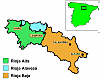
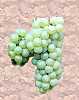

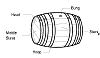
 Share this article